[
UK Defence Careers
]
Forging a unified recruitment ecosystem for the British Armed Forces.
Role
Lead Product & Visual Designer
Scope
UX/UI, Responsive Website, Motion, UI Kit
Duration
5 months
SUMMARY
Unifying the distinct cultures of the Army, Navy, and RAF meant navigating complex silos. We replaced a fragmented landscape with a single ecosystem. The One Defence platform puts candidate experience first, breaking down barriers to attract the next generation of talent.
My key contributions:
Strategic Visual Direction: Defined a "harmonising" brand system that unified the three forces while respecting their unique heritage.
Stakeholder Alignment: Facilitated workshops to bridge the gap between distinct service cultures (Army, Navy, RAF), driving consensus on a unified design language.
Experience Design: Led the high-fidelity UI and architectural design for the candidate dashboard and application journey.
Prototyping & Motion: Created advanced motion prototypes to articulate the product vision and secure stakeholder buy-in.
Bid Leadership: Collaborated with senior leadership to define "win themes" that were instrumental in securing the government contract.
The Recruitment Crisis
Joining the Armed Forces is a life-changing commitment. Yet the existing digital experience was rigid and confusing. This increased cognitive load during an already stressful process and pushed away qualified candidates.
Approach
We needed to humanise the bureaucracy. I led the design to remove complexity and create a reassuring interface. Through clear typography and plain English, we turned a bureaucratic hurdle into an empowering user journey.
Outcomes & Impact
We aligned our design outcomes directly with the MoD’s strategic recruitment targets.
Unified Data Architecture
Intelligent Triage Strategy
Validated a "Smart Triage" flow through user testing. Analysing skills rather than forcing an immediate branch choice significantly reduced decision fatigue.
Political & Visual Unification
Solved the tri-service equality challenge with a "Neutral Authority" design system. We delivered a scalable UI library that maintains distinct identities within a unified ecosystem.
Validated Process Transparency
Designed a "Transparent Tracker" to give real-time application visibility. Research confirmed this was the primary driver for reducing candidate anxiety and drop-off.
Deconstructing the Silos
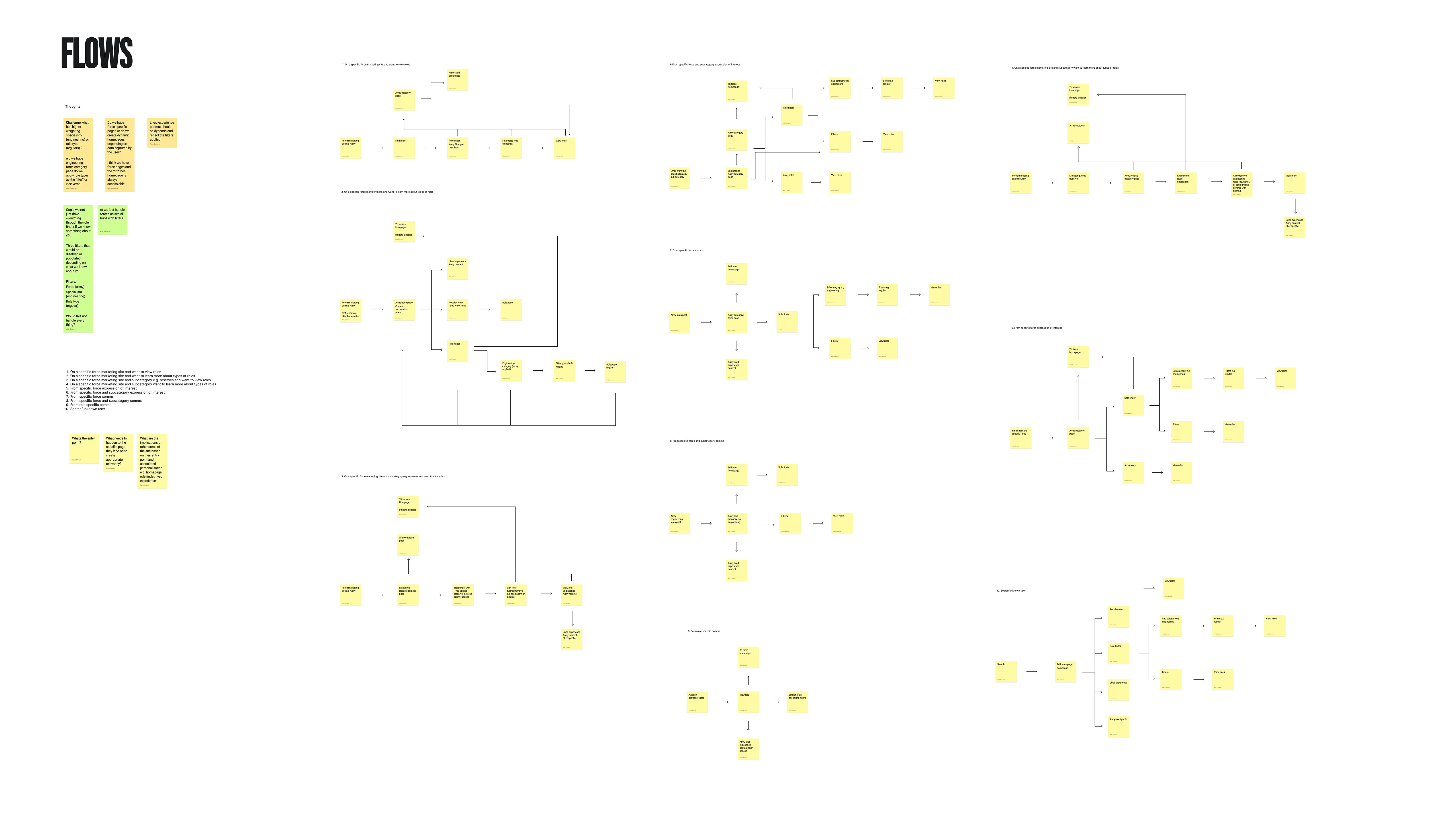
We used a rigorous, evidence-led approach. By auditing existing user journeys, we identified pain points and defined the core principles needed to shape a unified Defence identity.
Stakeholder Workshops
We ran sessions with representatives from all three services to understand their unique cultural “red lines” and specific requirements.
Global Benchmarking
To guide our strategy, we benchmarked recruitment platforms from allied nations (Canada, US, Australia). We mapped their site architectures to see how they structure complex information, helping us identify best-in-class patterns for guiding candidates through high-friction digital journeys.
Visual Strategy & Alignment
Visual direction was the first step in bridging the cultural gap. I used moodboards to illustrate a shared “One Defence” vision, securing stakeholder buy-in for a modern aesthetic that respected tradition. We then codified these principles into a design library to maintain consistency across the ecosystem.
System Design & Architecture
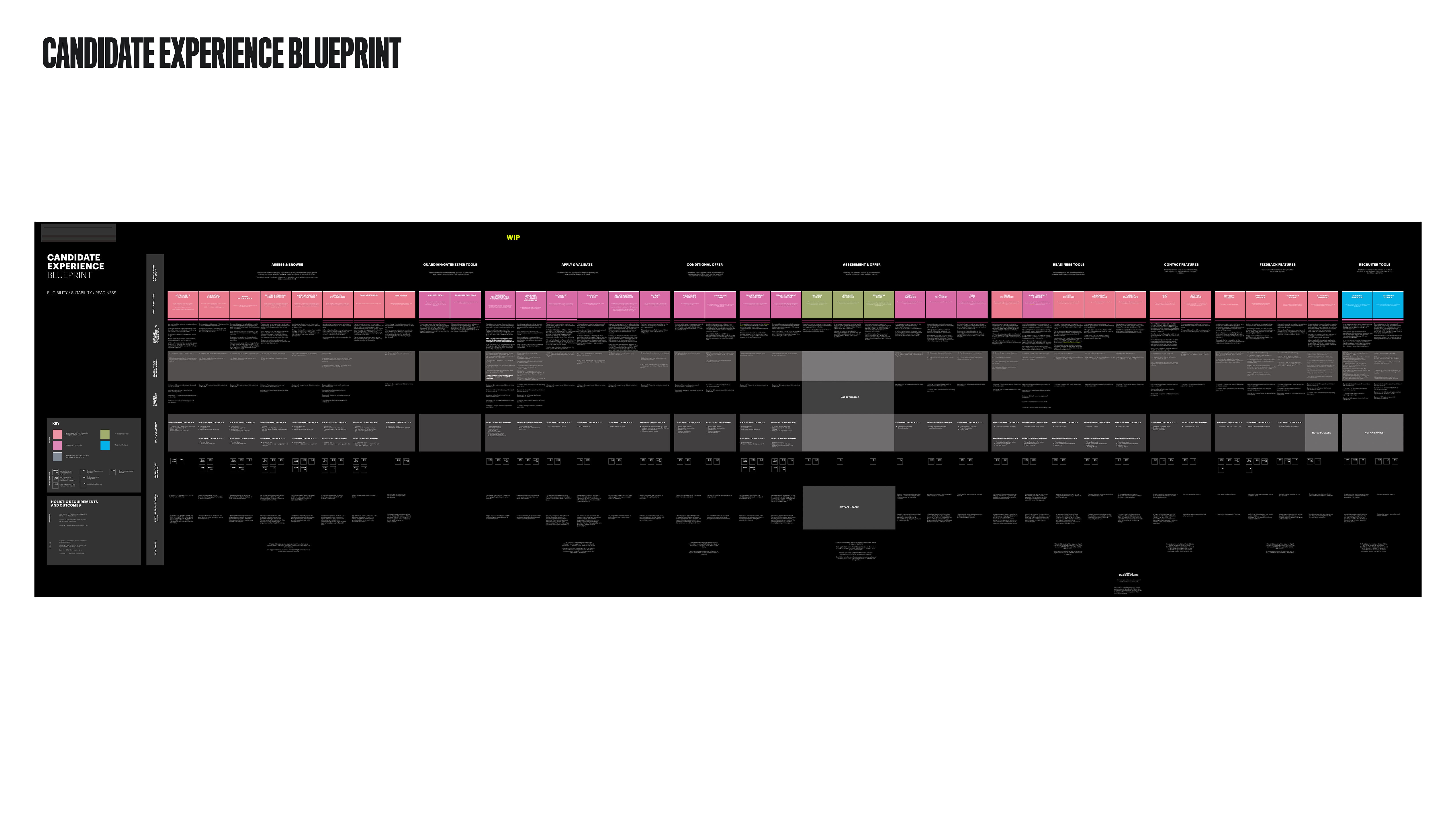
The Candidate Experience Blueprint
This strategic framework maps the full recruitment lifecycle of a UK Defence applicant across a gridded matrix. By visualising stages, actions, emotions, and touchpoints, it highlights friction points and helps optimise the unified process across all three services.
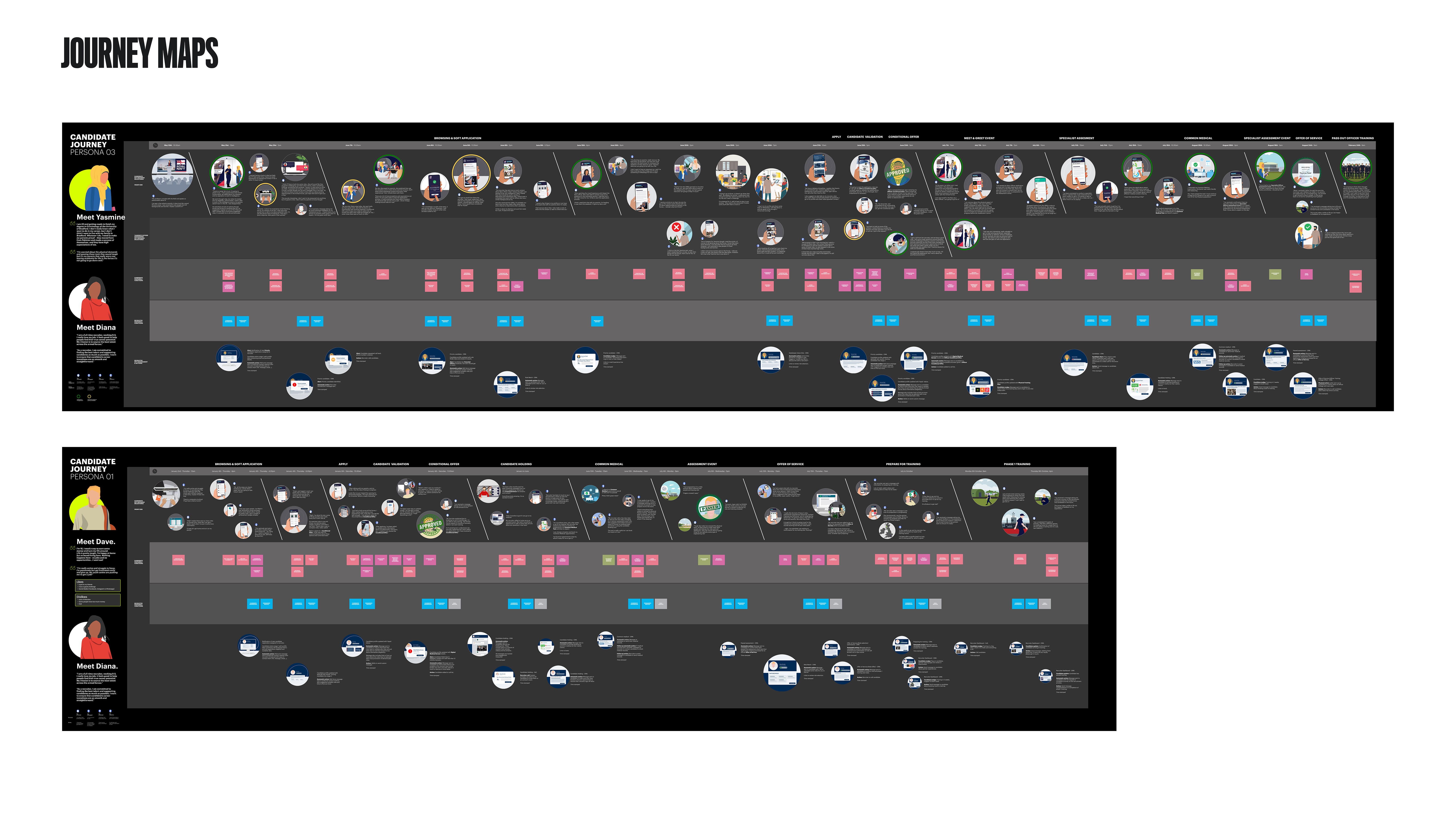
Journey maps
These narrative maps show the end-to-end lifecycle of Army, Navy, and RAF candidate personas. By tracking actions, emotions, and touchpoints from attraction to onboarding, they reveal friction points that guide the design of a unified digital recruitment experience.
Information Architecture
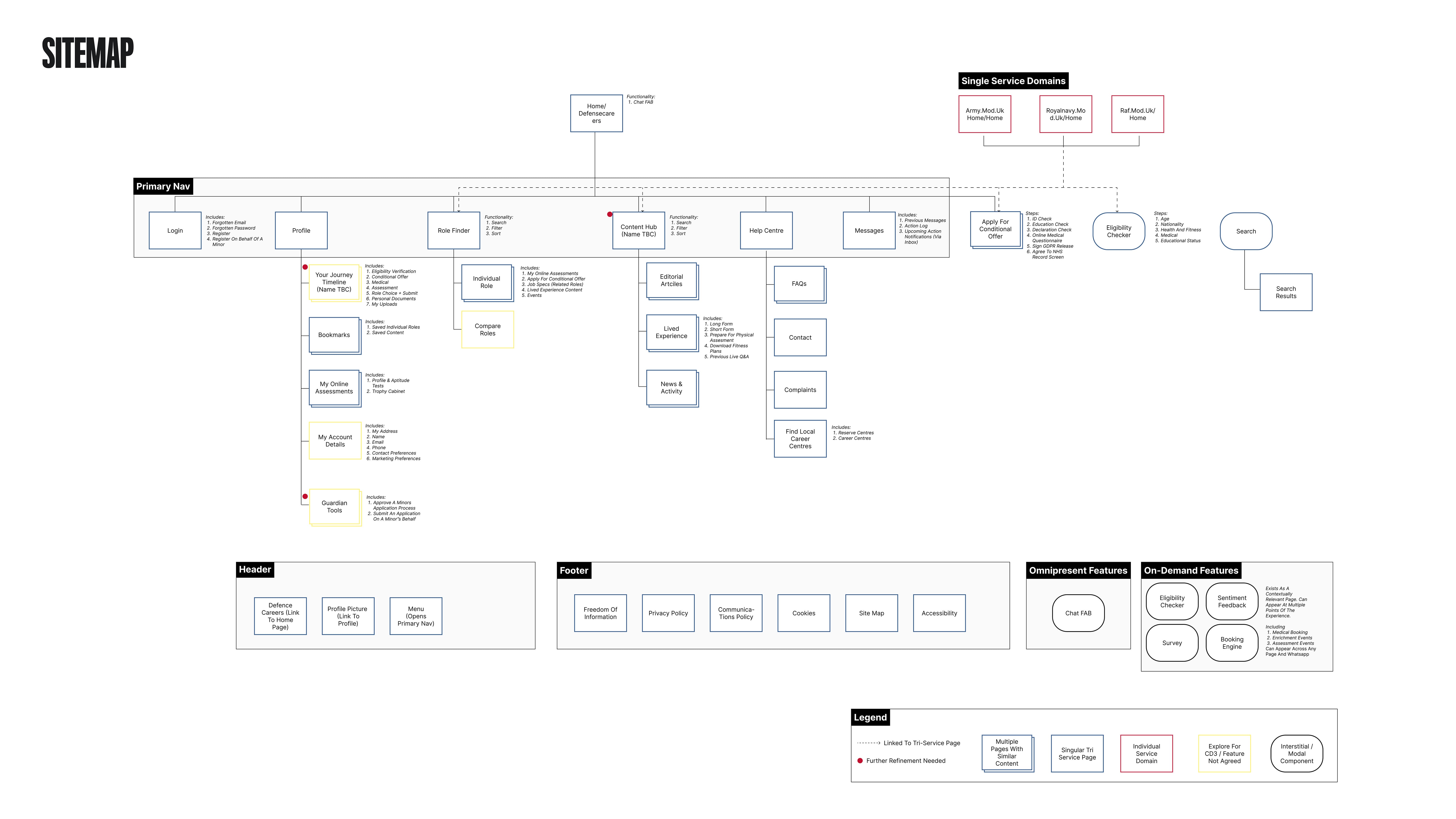
We mapped a unified sitemap that consolidated three massive websites into one streamlined portal.
The Diplomacy of Design
Our biggest challenge was political. We needed a solution that favoured no single service. I developed a “Neutral Authority” design system, using shared typography and layouts, with colour serving only as a navigational guide rather than a brand driver.
Bringing the Vision to Life
High-Fidelity Mockups
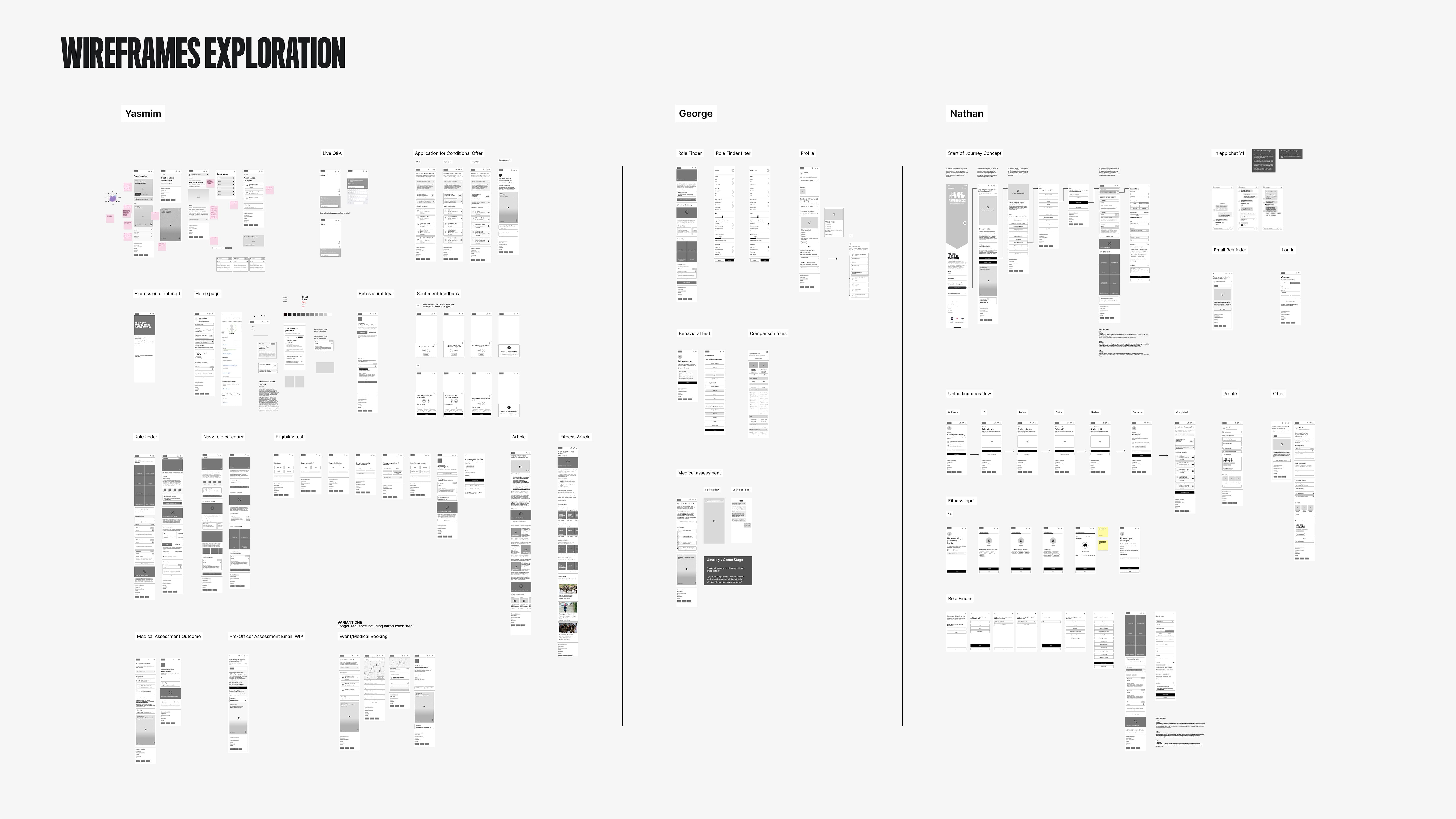
I led the detailed UI design for critical journeys, including the Landing Page, Role Finder, and the comprehensive Candidate Dashboard.
Motion UI
Motion was used as a functional guide, not decoration. For example, smooth transitions between “Army” and “Navy” modes alerted users to context changes without jarring page reloads.
Scalable Design Systems
We delivered a comprehensive UI kit and component library, enabling future design teams to maintain consistency across the entire Defence estate without reinventing core elements.
UI Kit and component library
Standards & Localisation
The GDS Challenge
We balanced the MoD’s desire for a premium aesthetic with strict government constraints. I pushed visual boundaries while maintaining WCAG 2.1 AA compliance, showing that accessibility doesn’t mean compromising on design quality.
Content Strategy & Localisation
We tested language with civilian user groups to ensure military terminology was replaced with plain English, introducing service-specific terms only as candidates progressed further down the funnel.
IMPACT & LEGACY
This project went beyond a standard redesign, establishing a blueprint for modernising recruitment culture. We shifted the vision of a century-old institution from a fractured internal focus to a unified, user-centric model.
We did more than design a website. We delivered a scalable infrastructure to empower the next generation of talent. The “One Defence” ecosystem was handed over as a flexible digital foundation, ready to evolve with the British Armed Forces over the next decade.
Retrospective & Roadmap
Our biggest learning was navigating the “Tribal Paradox,” balancing a unified system with the strong pride of each service. Moving forward, the roadmap should embrace “purposeful friction.” By introducing gamified assessments earlier, we can better filter for commitment, shifting the focus from application volume to the quality of hire.